Issue 16: Queensland launches nature offsets review
NSW's private landowners play crucial nature protection role ** Power tender to deliver massive grid boost ** Victoria calculates extreme weather costs ** Two parliaments investigate waste to energy ** Victorian water utilities scrutinised over sustainability reporting


Check out our latest podcast on Apple, Spotify, and YouTube.

NATIONAL
Electrification has a crucial role to play in ensuring energy security and prosperity, according to Australia's Climate Change and Energy Minister Chris Bowen and EU Energy Commissioner Dan Jørgensen.
In a joint statement, the two ministers agreed to work together "on a new global initiative on electrification".
The initiative will build on the momentum of the Global Energy Transition Forum and represents a significant opportunity to rally international action around electrification as a climate, economic and energy security imperative, they said.
COP31 President Murat Kulum also emphasised electrification in his remarks to the Copenhagen Climate Ministerial.
The Department of Agriculture is reviewing how agricultural emissions inhibitor products should be regulated in Australia.
Methane inhibitors (such as the seaweed Asparagopsis) can be fed or applied to grazing animals to reduce methane emissions. Methane from livestock accounts for most of Australia's agricultural emissions, and about 13% of national emissions.
Nitrification inhibitors improve nitrogen fertiliser efficiency and reduce the amount of nitrogen leaching from fertilisers into waterways and aquifers.
According to a departmental discussion paper, the current regulatory framework for these inhibitors is widely seen as "fragmented, incomplete and ambiguous".
Statutory development - right to repair. Treasury is consulting on a proposed expansion of Australia's motor vehicle repair information sharing scheme so that it also includes farm machinery.
The existing Motor Vehicle Service and Repair Information Sharing Scheme (MVIS) has operated since mid-2022.
The motor vehicle scheme specifies that information used to diagnose, repair, service, modify or dismantle motor vehicles must be made available on fair and reasonable commercial terms to Australian repairers.
The National Farmers Federation has welcomed the proposed reforms.
The CEFC has committed up to $10 million to support the deployment of more than 100 Sunswap Endurance fully electric truck refrigeration units.
The units are solar-assisted, with PV panels located on top of the units. They will be sold in Australia by Protran Solutions.
The 19 new renewables projects that were successful in the latest Capacity Investment Scheme tender round will deliver the largest ever boost to Australia's main electricity grid, according to Climate Change and Energy Minister Chris Bowen.
The successful projects, announced on the weekend, will support 7.8GW of new wind and solar generation and a further 7.9GWh in battery storage.
The projects will unlock an estimated $17 billion in private investment and create an estimated 19,000 construction jobs, Bowen said.
"Nearly $1.2 billion in social licence commitments will deliver shared benefits across local communities," the Minister added.
The projects will also use more than $257 million worth of Australian steel.
The next CIS tender opens today and will target 5GW of renewable generation. It will include a dedicated capacity allocation for projects that commit to equity and/or revenue sharing agreements with First Nations communities.
DCCEEW has released a research report on decarbonising commercial buildings, which was prepared by the Australian Sustainable Finance Institute.
"Decarbonising the built environment is possible using technologies that are commercially available, and the sector is seen as an opportunity for early action," the report says.
The report notes that governments have tried to use a wide range of grants and rebates to attempt to encourage commercial building decarbonisation, but these are often still not providing a compelling business case.
"Internationally, policy measures are moving towards regulation to create drivers for asset owners to upgrade their buildings," the report points out.
For example, the EU's revised Energy Performance of Buildings Directive sets minimum energy performance standards for commercial buildings, and seeks to create a phased wave of building renovations to make the building stock compatible with net-zero emissions by 2050.
"In Singapore, building energy performance is benchmarked, and building owners must create an energy efficiency improvement plan and implement its recommendations within three years," the report adds.
The Investor Group on Climate Change and the Queensland Investment Corporation have jointly released a guide to doing physical climate risk assessments for infrastructure assets.
DCCEEW has released the summary report of a desktop evaluation of the Reef 2050 Plan for the years 2021 to 2025.
The Department of Industry has released new guidance on regulatory requirements for removing oil and gas property and infrastructure from Commonwealth waters.
DCCEEW says it plans to boost minimum winter environmental flows from Menindee Lakes into the lower Darling/Baaka River from about 200ML per day to about 400ML per day.
Fish scientists describe this higher flow as a "recovery baseflow" that is designed to support the survival of young fish, especially Murray Cod.
Over the past decade, the river has faced repeated challenges, DCCEEW says.
At times flow has stopped completely, sometimes for more than a year. There have been major fish kills, and water quality has been poor.
These events have caused a sharp drop in native fish numbers, and Murray Cod populations "are still fragile", DCCEEW says.

QUEENSLAND
The Queensland government has released a discussion paper as part of a major review of the state's Environmental Offsets Framework.
The review is partly in response to the passage of the federal EPBC Act reforms.
The discussion paper highlights problems with the existing offsets framework including developer over-reliance on meeting offset conditions simply by making payments into the Queensland government's Offset Account.
The government is also finding it difficult to find suitable offset projects that could be funded through the Offset Account.
Reform proposals include making it clearer that offsets are only to be considered once all reasonable steps have been taken to avoid environmental impacts.
Proposed reforms would also support the development of a market to buy environmental offsets for major state projects in advance of when they are actually needed.
The state government also intends overhauling its outdated financial settlement offset calculator, which often underestimates the cost of securing offsets.
The paper suggests the flawed calculator is the reason that more than 90% of offset conditions are currently being met simply through payments into the Offset Account, as these payments are determined using the calculator.
The paper also points out that the federal government is currently developing its own financial offset calculator.
Aligning Queensland's calculator with the federal version could smooth the way for federal accreditation of Queensland's environmental offsets framework, it notes.
The first of two online information sessions is scheduled for this Friday.
The Queensland government has gazetted an environmental regulation that makes changes to Environmentally Relevant Activity standards for petroleum exploration and pipeline activities.
The changes align the conditions "with current legislation, policies, and best practices as well as address outdated references, correct inconsistencies, and improve clarity for operators and regulators", the government says.
The Queensland government says four new grid-scale battery projects that have recently reached key milestones will add another 940MW of storage to the grid.
The battery projects are capable of powering nearly one million homes at times of peak demand, according to the state government.

NSW
The NSW EPA will today give evidence to a NSW parliamentary committee inquiry into emissions from the fossil fuel sector.
The hearing is likely to hear evidence from the EPA on its recent changes to licensing requirements regarding greenhouse gas emissions.
Representatives of the Net Zero Commission and NSW Resources will also give evidence.
Transcript is now available of public forums on waste to energy convened by a NSW parliamentary inquiry on May 14 and 15 in Goulburn.
The federal government has released EPBC environmental documentation provided by Iberdrola for its proposed Mullion Creek wind farm near Orange.
The wind farm would be built in the Mullions Range softwood pine plantation, which is managed by the NSW Forestry Corporation.
The project would comprise up to 33 turbines. It would have the capacity to generate enough electricity for 106,000 homes and it would create up to 250 construction jobs.
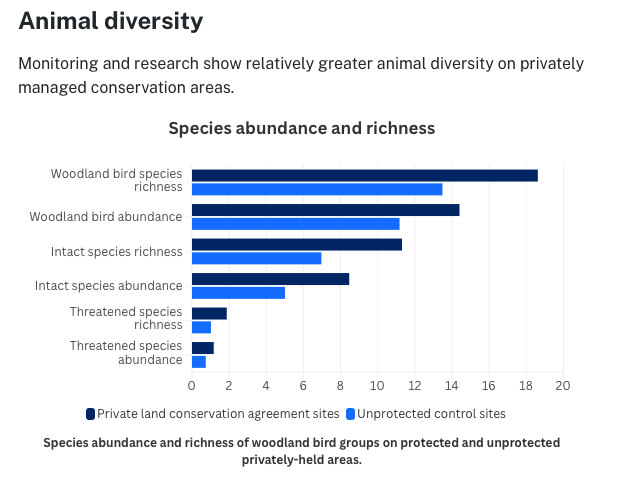
The NSW government has released a Biodiversity Impact Report focused on conservation activities on private land, facilitated by the Biodiversity Conservation Trust.
The report covers the years 2018 to 2025, and it shows that over those years the Biodiversity Conservation Trust and participating landholders have:
- Prevented the loss of approximately 35,000 hectares of native vegetation.
- Protected habitat for at least 304 threatened species.
- Safeguarded 41 threatened ecological communities.
- Contributed nearly 40% of the total area added to NSW's protected area network since 2018.
Landholders participating in the Biodiversity Conservation Trust program manage their properties for conservation in exchange for annual payments.
The NSW government, through energy tender administrator ASL, has opened the state's largest ever tender for new clean energy generation, which has an indicative target of 2.5 GW of new capacity.
Successful projects in the tender round will be offered a Long-Term Electricity Service Agreement (LTESA) that allows them to get support if market revenues fall below a pre-agreed floor. When revenues are strong and rise above a defined ceiling, projects must repay a proportion of any previous support.
Generation LTESA tenders were paused for two years while projects in NSW participated in the federal Capacity Investment Scheme (CIS), which operates in a similar way.
With the NSW allocation under the CIS expected to be shortly met, the NSW tender marks a return to support under the state's energy roadmap.
Concurrently, ASL will also conduct a new tender for 12GWh of Long-Duration Storage.
Ausgrid has completed stage one of the Hunter-Central Coast Renewable Energy Zone (REZ) network infrastructure upgrade.
Stage one will allow 350MW of new renewable energy capacity to connect in the region.
Completion of the entire project, which is scheduled for 2028, will allow about 1.8GW of new generation and storage to connect to the grid, and will allow up to 1GW of capacity to be exported at any one time.
The project is unique because it mostly involves an upgrade of existing distribution poles and wires, instead of the construction of new transmission lines.
The NSW Auditor-General has released a report on the $880 million Resilient Homes and Resilient Lands program administered by the NSW Reconstruction Authority.
The program aimed to buy back homes in the Northern Rivers region that were affected by the 2022 floods, and which became uninhabitable.
The audit says the program started with insufficient planning and risk mitigation measures.
"This had a significant impact on their ongoing implementation and led to delays," the report says.
The NSW Investment Delivery Authority is seeking Expressions of Interest for major projects that safeguard the state against future global fuel supply shocks.
The Authority is focused on commercial-scale projects valued at $100 million or more that would directly improve fuel security, including renewable fuel projects and heavy electric vehicle charging hubs.
The Authority will help remove delivery barriers for selected projects, will support them to progress more quickly.

VICTORIA
Infrastructure Victoria has released a new report that warns that the state's infrastructure "faces a rapidly escalating risk landscape driven by climate change".
The report is the largest analysis ever done of the climate change risks to Victorian Government-owned and regulated infrastructure.
It looks at $318 billion worth of assets across Victoria and the risks they face from seven different extreme weather events.
The report finds that more than $57 billion of Victorian Government-owned or regulated infrastructure is at risk of damage or destruction from extreme weather. In the next 40 years, this value at risk rises to more than $71 billion.
Bushfire, flood and extreme heat pose the greatest risk, the report concludes.
It says that $20.2 billion of roads are at risk from climate hazards, mainly bushfire and floods, as well as rail infrastructure worth $10.3 billion and energy infrastructure worth $7.1 billion.
Steelmaker InfraBuild has confirmed that its Laverton facility in western Melbourne is now contracting sufficient renewable electricity to meet up to 50% of its electricity needs.
The Laverton Power Purchase Agreement with a Victorian wind farm augments InfraBuild's existing 25% renewable energy agreement at its Sydney Steel Mill and Newcastle Rod Mill in NSW.
The agreements form part of InfraBuild's efforts to be fully reliant on renewable electricity across all its manufacturing sites by 2030.
InfraBuild is also planning to secure supplies of biomethane as a replacement for fossil gas in parts of the Laverton mill that can't readily be electrified.
Victoria's auditor-general has released a report on sustainability reporting by the state's water corporations, which are all required to achieve net zero emissions by 2030.
The audit focuses on reporting by Melbourne Water, South East Water, Yarra Valley Water, and Greater Western Water.
It concludes their sustainability reporting for last financial year was incomplete and inconsistent. However, some reporting requirements are complex and overlap, the audit report acknowledges.
The audit report also includes a list of better practices for sustainability reporting, which the Auditor-General's office has developed to help Victorian departments and agencies to strengthen their sustainability reporting.
A Victorian parliamentary committee inquiry into waste to energy will hold a public hearing tomorrow.
Those giving evidence include Gayle Sloan, chief executive of the Waste Management and Resource Recovery Association, and a representative of paper company Opal, which is implementing a waste to energy plant at its Maryvale mill that will slash its use of fossil gas.
Representatives of EPA Victoria, and Infrastructure Victoria will also appear before the inquiry.
The federal government is providing $120.3 million under its Social Housing Energy Performance Initiative (SHEPI) to support energy upgrades at an additional 8,000 homes.
The funding will be targeted at public and community housing, and will support upgrades such as the installation of air conditioners, hot water heat pumps, ceiling insulation, and induction cooktops.
The new commitment comes on top of previous SHEPI funding that has supported upgrades for almost 3,500 homes.

TASMANIA
The Tasmanian Parliament's Joint Select Committee on Energy Matters has tabled its interim report on energy prices and related matters.
"While Tasmania has among the lowest regulated standing offer electricity tariffs in Australia, this does not reflect the lived experience of many Tasmanians when paying their electricity bills," the report says.
"Higher per-household consumption, driven by the state's cold climate, ageing and poorly insulated housing stock, and high reliance on electric heating, means Tasmanian households face among the highest electricity bills in the country," it says.
The interim report recommends a review of Tasmania's minimum energy efficiency standards for rental properties to ensure they meet contemporary standards.
And it recommends working with the federal government to deliver programs that improve the energy efficiency of public and private rental properties.

SOUTH AUSTRALIA
As previously flagged by Premier Peter Malinauskas, the South Australian government has introduced a Bill that would lift the moratorium on fracking in the South-East of the state.
The moratorium dates from 2018.
Energy and Mining Minister Tom Koutsantonis told Parliament that extensive research shows fracking doesn't pose a significant risk to groundwater if it is properly managed and regulated.
The South Australian Opposition is opposed to lifting the moratorium.
The South Australian government has released draft updated flood hazard mapping and planning rules.

NORTHERN TERRITORY
The NT EPA has invited comment on draft terms of reference for the environmental impact statement for SunCable's Muckaty solar project.
The project would build on SunCable's already approved AAPowerLink project, which would generate up to 6GW of clean energy, for supply to industrial customers in Darwin and Singapore.
SunCable with make a Final Investment Decision on the AAPowerLink project towards the end of 2027, with customers in Darwin expected to be offtaking electricity from 2032.
SunCable aims to have the Muckaty solar farm approved before it makes a Final Investment Decision on AAPowerLink.
Muckaty would be built in stages, and would have up to 5GW of generating capacity as well as 21.7GWh of battery storage.
SunCable also regards co-located data centres as prospective customers for its electricity.
The NT EPA is inviting comment on draft terms of reference for environmental impact statements for three inter-related carbon capture and storage projects proposed by INPEX.
One project would establish a CO2 compression and export system at INPEX's Ichthys LNG plant on Bladin Point in Darwin.
Another would install a buried onshore pipeline system between the Ichthys LNG plant and the inlet to a longer pipeline to the sequestration site.
The third project would install a 90km pipeline running from Darwin Harbour to the boundary of the Northern Territory’s Coastal Waters.
The pipeline would take CO2 from a range of industrial customers in Darwin for sequestration in Commonwealth waters, with start-up provisionally scheduled for 2031.
INPEX says the potential Bonaparte storage site could sequester more than 300 million tonnes of CO2, stored at the rate of 10 million tonnes annually.
INPEX is also interested in storing CO2 imported from across the Asia Pacific at the Bonaparte site.

THE COP31 GLOBAL CLIMATE TALKS
COP31 President Murat Kurum and President of the Negotiations Chris Bowen have released a joint letter to COP parties.
In it, Chris Bowen names three Pacific climate envoys:
- Ms Kristina Eonemto Stege from the Republic of Marshall Islands, Regional Envoy for Oceania, focused on keeping 1.5 degrees within reach.
- Mr Ruel Yamuna, from Papua New Guinea, Envoy for Access to Climate Finance.
- Hon Inia B Seruiratu MP, from Fiji, Envoy for the Ocean.
Minister Bowen also names some key Australian appointments.
DCCEEW Deputy Secretary Kushla Munro will serve as executive director for Australia's President of Negotiations, "and will lead Australia’s overall COP31 endeavour".
Dr Sally Box will serve as Deputy President of Negotiations and Chief Negotiator for COP31.
David Higgins will serve as Deputy Executive Director for Australia’s President of Negotiations, and will lead on Pre-COP as well as Australia's contributions to the Action Agenda in collaboration with Türkiye.
The latest letter follows the release of the inaugural letter in April, which was issued only under the name of COP President Murat Kurum.
Meanwhile, Türkiye abstained from last week's crucial UN General Assembly vote on the International Court of Justice advisory opinion on climate change.
That's it, you're up to date! If you’re an Earthed member, another issue of Earthed will land in your inbox next Monday.
If you're not a member, join up on a free or paid plan so you don't miss out!
Author
Sign up for Earthed newsletters.
Stay up to date with curated collection of our top stories.